A skin analysis is a photographic assessment that measures what is happening in your skin beyond what a mirror shows. Two systems come up again and again when Austin patients search: VISIA complexion analysis and AI 3D skin analysis. Knowing what each one measures helps you choose the session that fits your goals.
Quick answer: VISIA is Canfield's 2D complexion analysis, widely used in dermatology, scoring eight skin features against people of your age and skin type. Our practice offers the AI Magic 3D Skin Analyzer, which images the face eight layers deep and tracks nine markers plus projected aging. A scan is $75 at Banyan & Bamboo on South Lamar (78704), credited toward a new client's first treatment within 30 days with code FREESKIN. The scan takes 20 minutes including the consultation, and your provider reviews the report with you in person.
What Is VISIA Skin Analysis?
VISIA Complexion Analysis is a photographic system made by Canfield. You rest your face in a booth and the camera captures a series of images under three kinds of light: standard, cross-polarized, and UV. Standard light records what you see in the mirror. Cross-polarized light removes surface glare so redness and pigment show clearly. UV light picks up sun damage and porphyrins, a byproduct of bacteria in pores.
From those images, VISIA scores eight features:
- Spots
- Wrinkles
- Texture
- Pores
- UV spots
- Brown spots
- Red areas
- Porphyrins
Each score is compared to a percentile of people of the same age and skin type. VISIA also produces a TruSkin Age estimate, a single number that summarizes how your skin compares to your calendar age.
VISIA is a 2D system. It works from flat photographs and is widely used in dermatology practices as a baseline and a progress tool.
Is VISIA Skin Analysis Accurate?
For what it measures, yes. VISIA has been in dermatology offices for years, and its scores are consistent from visit to visit under the same conditions. The value of any skin analysis lives in the comparison: your face today against your face in three months.
A few things shape the reading:
- Lighting and positioning. The booth standardizes both, which is why the numbers are repeatable.
- What is on your skin. Makeup, sunscreen, and skincare change what the camera reads.
- The comparison pool. Your percentile is relative to people of the same age and skin type in the system's database.
It gives a clear, dependable picture of spots, texture, pores, and sun damage, and it is a strong baseline and progress tool.
What Is AI Skin Analysis?
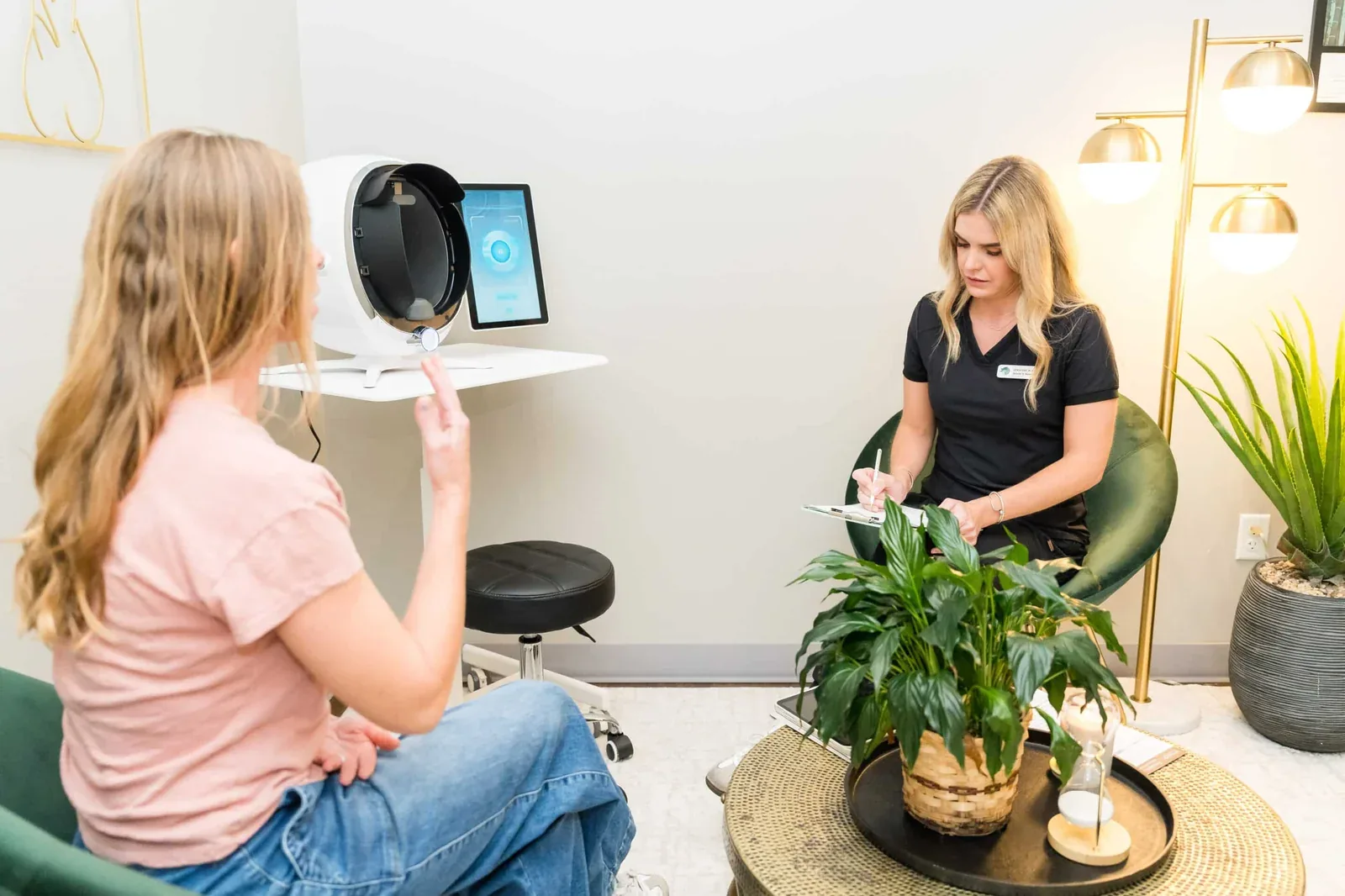
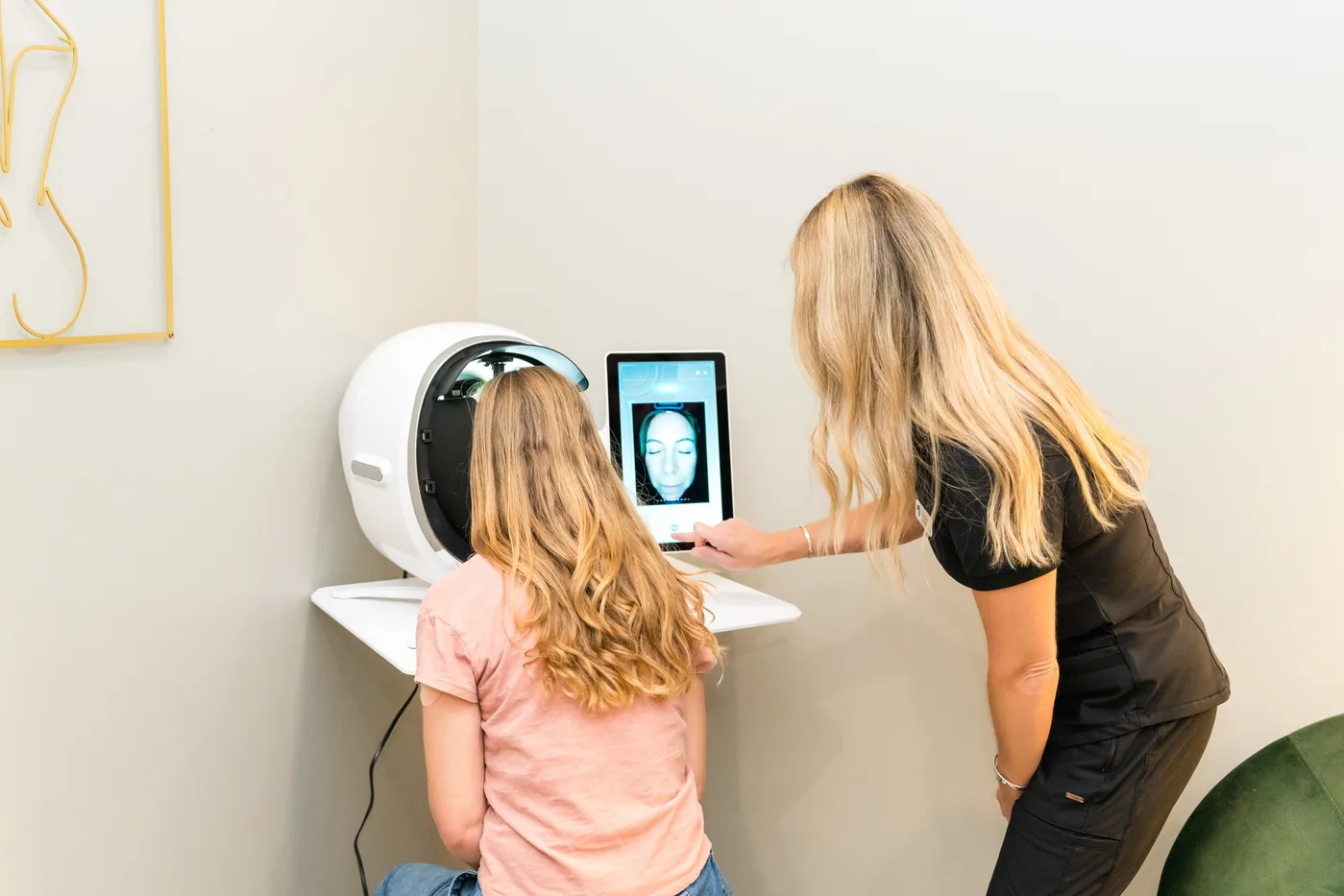
AI skin analysis uses computer vision to read skin images and score them against a large trained dataset. At Banyan & Bamboo we use the AI Magic 3D Skin Analyzer, built on Perfect Corp technology. The scan captures your face from three points under natural, polarized, and UV light, eight layers deep.
The system measures nine markers:
- Hydration
- Pigmentation
- UV damage
- Pore size
- Texture
- Redness
- Wrinkles
- Oiliness
- Early signs of aging that are invisible to the naked eye
It also produces a projected skin aging view, which shows where your skin is headed if nothing changes. The system is calibrated for all Fitzpatrick skin types, including deeper tones. The scan takes 20 to 30 minutes, and you receive a digital copy of the report. Our AI skin analysis page covers the service in full. Our post on how 3D skin analysis improves skincare goes deeper on the scan itself.
VISIA vs AI Skin Analysis: Side by Side
Here is how the two systems line up on the points patients ask about most often.
| Feature | VISIA Complexion Analysis | AI Magic 3D Skin Analyzer |
|---|---|---|
| Image type | 2D photographs | 3D capture from three points |
| Light sources | Standard, cross-polarized, UV | Natural, polarized, UV |
| Depth | Surface plus UV-revealed damage | Eight layers deep |
| Markers scored | Spots, wrinkles, texture, pores, UV spots, brown spots, red areas, porphyrins | Hydration, pigmentation, UV damage, pore size, texture, redness, wrinkles, oiliness, early aging signs |
| Age feature | TruSkin Age estimate | Projected skin aging |
| Scoring reference | Percentile of people your age and skin type | Calibrated for all Fitzpatrick skin types |
| Repeat cadence | Set by your office | Every 90 days |
The overlap is wide. Both systems score wrinkles, texture, pores, redness, and pigment, and both use UV light to show sun damage before it surfaces. Both do those jobs well.
The differences are in scope and format. VISIA gives you the percentile comparison and the TruSkin Age number, useful when you want to see how you measure against people your age. Our scan adds hydration and oiliness, which drive facial and homecare decisions, and it captures the face in 3D across eight layers.
Which Skin Analysis Is Right for You?
Both are useful. The right one depends on where you are getting care and what you plan to do with the results.
VISIA fits well when:
- You are already seeing a dermatologist who uses it.
- You want the same-age, same-skin-type percentile comparison.
- You are tracking a specific concern with that office over time.
Our AI 3D scan fits well when:
- You want hydration and oil readings to guide facials and homecare.
- You want a treatment plan built from the scan in the same visit.
- You want a digital copy of the report to keep.
- You plan to track results against injectables, collagen treatments, and facials in one place.
Many patients end up with both over the years. If you have a VISIA report, mention it at your assessment.
How Much Does a Skin Analysis Cost?
At our practice, a standalone AI 3D skin analysis is $75. The scan is complimentary when you book it with injectables or an advanced facial.
VISIA sessions are priced by each office that offers them. Some dermatology practices include the scan in a consultation and others charge for it separately. Ask when you book.
What to Expect From an AI Skin Analysis Session With Us
Arrive with clean skin. No makeup and no sunscreen, since both change what the camera reads.
The scan itself takes 20 to 30 minutes. You position your face for three captures, and the system images you under natural, polarized, and UV light. It is painless and there is no downtime.
Then the review. Brittany Cantu, AME, our lead injector with 21+ years of experience, reviews the report with patients who are planning injectables. Our licensed aestheticians review it with patients who are planning facials.
From there we build your 365 Beauty Blueprint, a 6 to 12 month roadmap. It includes:
- Quarterly scans to measure progress
- Conservative injectables such as Botox and Dysport in Austin
- Collagen-stimulating treatments such as Sculptra, microneedling, and PDRN
- Seasonal facials
- Personalized medical-grade homecare
You leave with a 90-day kickoff plan, payment options, and your first appointments scheduled.
How to Read Your Skin Analysis Results
Start with the two or three markers your provider flags, since those are the ones your plan is built around. Then read the rest in groups.
- Hydration and oiliness. These tell us how your skin barrier is doing and shape your cleanser, moisturizer, and facial choices.
- Pigmentation and UV damage. These show sun exposure, including damage that has yet to surface. This is where we talk about sun protection and chemical peels.
- Pore size and texture. These respond to microneedling, peels, and consistent homecare.
- Wrinkles. Fine lines from expression point toward neuromodulators. Deeper lines from volume loss point toward collagen stimulators.
- Redness. Often a barrier or sensitivity issue, which changes how gentle your plan needs to be.
- Projected aging. A direction, and the thing your Blueprint is designed to change.
If you are reading a VISIA report, the same logic applies. The percentile tells you where you sit among peers, and the TruSkin Age gives you one number to watch over time. Our skincare by age guide explains what tends to change in each decade.
How Often to Repeat a Skin Analysis
We rescan every 90 days. That interval gives treatments and homecare enough time to show up in the readings. It also matches the quarterly scans built into the 365 Beauty Blueprint. The same markers are measured at each visit, so the comparison is clean.
If hydration has climbed and pigmentation has held steady, we know the homecare is working. If a marker has stalled, we adjust before another quarter passes.
For VISIA, the repeat schedule is set by the office that runs it.
Skin Analysis Near Me: Finding a Session in Austin
If you searched "visia skin analysis near me," you will find dermatology offices around Austin that offer it. If you searched "ai skin analysis," you will find us. A few questions help you compare any office:
- What does the system measure, and how many markers?
- Who reviews the results with me, and what are their credentials?
- How much does the scan cost, and is it included with treatment?
Whichever system you choose, the report is only as useful as the plan that follows it.
Frequently Asked Questions About VISIA and AI Skin Analysis
Is AI skin analysis the same as VISIA?
No. VISIA is Canfield's 2D photographic system that scores eight features against a same-age, same-skin-type percentile. Our AI Magic 3D Skin Analyzer captures the face from three points, reads eight layers deep, and scores nine markers plus projected aging. Both are useful baseline and progress tools.
Do I need to remove makeup before a skin analysis?
Yes. Arrive with clean skin and no makeup or sunscreen. Anything on the surface changes what the camera reads, and a clean face gives you an accurate baseline to measure against later.
How long does an AI skin analysis take?
The scan itself takes 20 to 30 minutes. Your provider then reviews the report with you in person and builds your plan, so allow extra time at your first visit.
Does AI skin analysis work on deeper skin tones?
Yes. The AI Magic 3D Skin Analyzer is calibrated for all Fitzpatrick skin types, including deeper tones. Pigmentation, redness, and UV damage readings hold up across the full range of complexions.
Is the skin analysis free with a treatment?
The scan is complimentary when you book it with injectables or an advanced facial. On its own, the AI 3D skin analysis is $75, which includes the full report, the in-person review, and a digital copy.
What happens after my skin analysis?
We build your 365 Beauty Blueprint, a 6 to 12 month roadmap with quarterly scans, conservative injectables, collagen-stimulating treatments, seasonal facials, and medical-grade homecare. You leave with a 90-day kickoff plan, payment options, and your first appointments scheduled.
Book an AI Skin Analysis in Austin
Your scan starts with clean skin and ends with a plan. Book the analysis on its own, or pair it with injectables or an advanced facial at our Austin med spa, where it is complimentary.
- Book: Schedule your skin analysis
- Call or text: 512-890-1130
- Visit: 3005 S Lamar Blvd Suite D-112, Austin TX 78704

Owner & Founder, Banyan & Bamboo Day Spa + Med Spa · South Lamar, Austin TX. Jennifer built Banyan & Bamboo to bring clinical-grade results and boutique-quality experience to South Austin.