An AI skin analysis is a 20 to 30 minute appointment that photographs your face under three types of light and scores what it finds. It matters because most skin concerns begin below the surface, months before they show in the mirror. A scan gives you a measured starting point, so every product and treatment you choose has a reason behind it.
Quick answer: At Banyan & Bamboo on South Lamar (78704), the AI Magic 3D Skin Analyzer photographs your skin under natural, polarized, and UV light. It measures hydration, pigmentation, UV damage, pore size, texture, redness, wrinkles, and oiliness, then projects how your skin will age. The scan is $75. New clients get the $75 credited toward their first treatment within 30 days with code FREESKIN. Our team reviews the report with you the same day, and you leave with a digital copy and a 90-day plan.
What Is AI Skin Analysis?
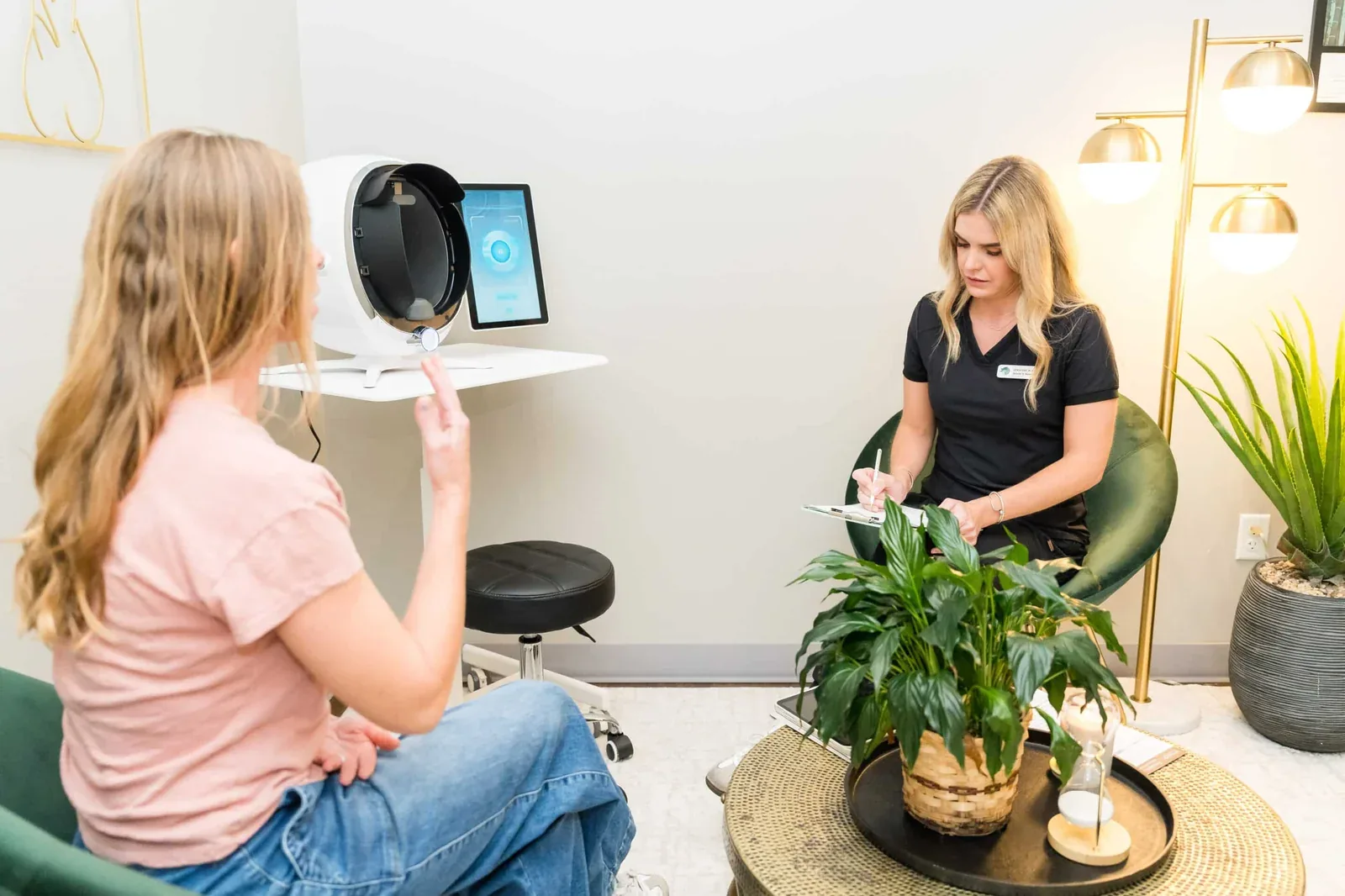
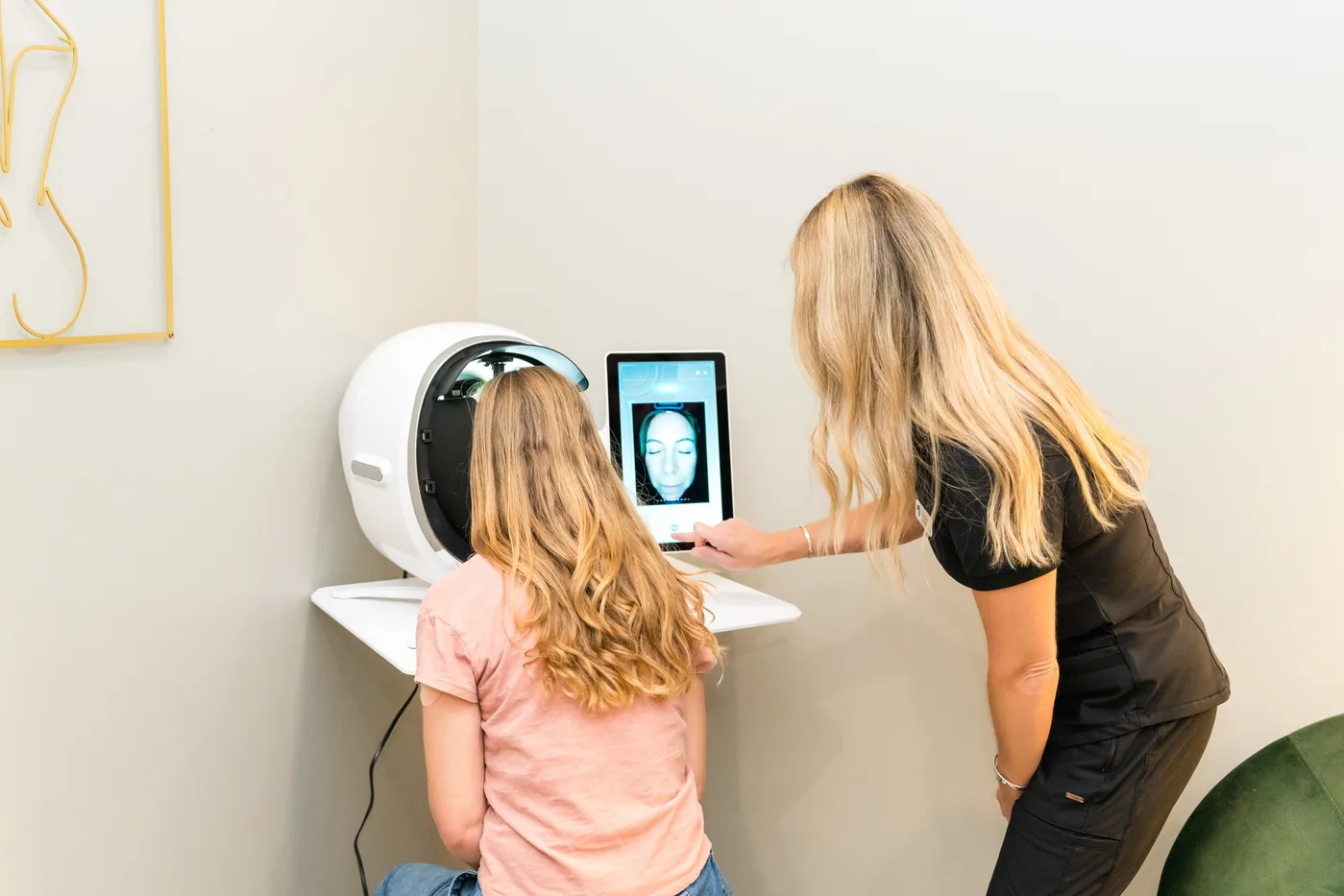
AI skin analysis uses a camera system and software to measure skin conditions that a visual exam can only estimate. Our practice uses the AI Magic 3D Skin Analyzer, built on Perfect Corp technology. It takes three-point photos of your face under natural light, polarized light, and UV light. The software then reads those images eight layers deep and scores each marker.
A trained eye can spot a dark patch or an oily T-zone. The scanner tells you how deep the pigment sits, how large the pores measure, and how much sun damage is forming under the surface. That detail is what turns a skincare guess into a plan.
The device is calibrated for all Fitzpatrick skin types, including deeper tones. Patients with melanin-rich skin get accurate readings for pigmentation and UV exposure, which matters when uneven tone is the main concern.
If you are weighing this scan against VISIA, our AI vs VISIA comparison covers the differences. This post stays on the appointment itself: what gets measured, how to prepare, and how to read what comes back.
What Does an AI Skin Analysis Measure?
The scan scores nine markers and adds a projection. Here is what each one tells you.
- Hydration: how much water the skin is holding, which is a direct read on barrier health.
- Pigmentation: dark spots and uneven tone, including how deep they sit.
- UV damage: sun exposure that has already changed the skin but stays hidden under normal light.
- Pore size: measured, so you can compare it at the next scan.
- Texture: roughness and unevenness across the surface.
- Redness: diffuse flushing and visible vessels.
- Wrinkles: fine lines and deeper folds, mapped by location.
- Oiliness: sebum levels by zone.
- Early signs of aging: changes that are invisible to the naked eye but already underway.
The projected skin aging image is the piece patients remember. It shows the direction your skin is heading if nothing changes. Seeing it is often what moves a patient to wear sunscreen every day.
The software reads the same markers every time, so the scan works as a benchmark. Our post on how 3D skin analysis improves skincare explains why that matters.
How to Prepare for a Skin Analysis
The scanner reads whatever is on your skin, so the goal is to arrive with a clean, bare face.
- Arrive with no makeup. Foundation and concealer hide pigment and fill pores, which skews two of the main readings.
- Skip sunscreen that morning. SPF sits on the surface and interferes with the UV layer. Put it back on right after the scan.
- Cleanse before you come, or with us. The first step of the appointment is a cleanse, so a bare face at home is enough.
- Keep your routine normal. Use your usual products the week before. The scan should reflect your everyday skin.
If you have a facial or injectable appointment the same day, tell us when you book. The scan fits at the start of the visit.
What Happens During a 3D Skin Analysis Appointment
The full appointment takes 20 to 30 minutes and follows five steps.
- Cleanse. We remove any makeup, sunscreen, or residue so the scanner sees bare skin.
- Scan. You rest your face in the device. It captures three angles under natural, polarized, and UV light. This part takes a few minutes and is painless.
- Review. We walk through the report layer by layer, including the projected aging image, and answer your questions. You receive a digital copy.
- Plan. We build a personalized 90-day kickoff plan with payment options and scheduling, so the next steps are set before you leave.
- Track. Your full report includes progress benchmarks. A rescan every 90 days measures the same markers again.
The 3D skin analysis itself is the shortest part. The review and the plan are where the appointment earns its time.
How to Read Your Skin Analysis Report
Every marker is scored and shown as an image layer over your own face. Here is how we read it with patients, in the order that tells the clearest story.
Start with the UV layer. This is the sun damage you cannot see. Dark areas on this layer are pigment that has formed under the surface and has yet to reach it. A busy UV layer with clear skin in the mirror is a preview, and it is the strongest argument for daily SPF.
Then the pigmentation layer. This shows dark spots and uneven tone with depth. Shallow pigment responds to brightening homecare and chemical peels. Deeper pigment needs a longer, steadier plan. Knowing which one you have saves months.
Texture and pores next. These two layers describe the surface. Enlarged pores usually track with the oil reading. Rough texture often improves with exfoliation and hydration before any treatment is needed.
Hydration and oil together. Read these as a pair. Low hydration with high oil is a common pattern in Austin and points to a stressed barrier. The skin is producing oil to compensate for water it cannot hold. The fix is barrier repair, and the scan makes that obvious.
Finish with projected aging. This image shows where your skin is heading if nothing changes. It is a direction, and every step in your plan is designed to change it.
The same markers are measured at each rescan, so at 90 days you are comparing numbers and images. There is no guesswork about whether something worked.
What Happens After the Scan
The scan feeds a roadmap we call the 365 Beauty Blueprint. It is a 6 to 12 month plan with quarterly scans, built around what your report showed. A typical blueprint includes:
- Conservative injectables where lines are forming, placed by Brittany Cantu, AME, our lead injector.
- Collagen-stimulating treatments such as Sculptra, microneedling, and PDRN for firmness and repair.
- Seasonal facials matched to what Austin weather is doing to your skin.
- Personalized medical-grade homecare, chosen for the markers that scored lowest.
Your 90-day kickoff plan is the opening chapter. At the rescan, we compare every marker to your baseline, keep what is working, and adjust what is lagging.
How Much Does a Skin Analysis Cost?
| Option | Price | What is included |
|---|---|---|
| Standalone AI skin analysis | $75 | Cleanse, scan, review, digital report, 90-day plan |
| With injectables | Complimentary | Same scan and report, done at the start of your visit |
| With advanced facials | Complimentary | Same scan and report, done at the start of your visit |
Most patients who come in for a treatment never pay for the scan. Booking it on its own makes sense when you want the data first. Either way, the report is yours to keep.
How Often Should You Get a Skin Analysis?
Every 90 days. That interval is long enough for a homecare change or a treatment series to show up in the markers. It is short enough to catch a plan that is drifting and correct it before a season passes.
Ninety days also matches the quarterly scans in the 365 Beauty Blueprint. Each rescan measures the same markers. Patients see their hydration, texture, and pigment scores move in a clear direction and know which step caused it.
Skin Analysis by Age
The scan reads the same markers at every age. The plan that follows changes. Our skincare by age page goes deeper.
- 20s: the report usually shows early UV damage before anything is visible. The focus is prevention: SPF, antioxidants, gentle exfoliation, and collagen support.
- 30s and 40s: pigmentation, texture, and early wrinkle scores start to move. The plan shifts to brightening, firming, hydration, and targeted treatments.
- 50s and beyond: hydration and elasticity lead the conversation. Deep hydration, elasticity support, and tone are the priorities.
- Men's skin health: the scan cuts straight to what matters. Men get a plan with no unnecessary steps.
Skin Analysis Near Me: What to Look For in Austin
If you are searching for a skin analysis near me in Austin, a few details separate a useful scan from a photo.
- Three light sources, including UV. Natural light alone shows what you already see in the mirror.
- Calibration for every skin tone. A device that reads deeper skin poorly gives deeper-toned patients a poor plan.
- A rescan schedule. A single scan is a snapshot. A 90-day rescan is what turns it into progress.
- A provider who reviews it with you. The software scores. A person explains what the scores mean for you.
Our AI skin analysis service page covers the full appointment and how to add it to a treatment visit.
Frequently Asked Questions About AI Skin Analysis
Does an AI skin analysis hurt?
No. The scan is imaging only. You rest your face in the device while it photographs you under natural, polarized, and UV light. Nothing touches your skin beyond the cleanse at the start.
Can I wear makeup to a skin analysis?
Please arrive bare-faced. Makeup hides pigment and fills pores, and sunscreen blocks the UV layer, which skews the readings. We cleanse your skin at the start of the appointment, and you can reapply SPF as soon as the scan is done.
Is AI skin analysis accurate for darker skin tones?
Yes. The AI Magic 3D Skin Analyzer is calibrated for all Fitzpatrick skin types, including deeper tones. Pigmentation and UV readings stay accurate across the full range, which matters because uneven tone is one of the most common concerns we see.
Do I get to keep my skin analysis report?
Yes. You receive a digital copy of the full report, including every image layer, your scores, the projected aging image, and your progress benchmarks. Bring it back at your 90-day rescan or compare it on your own.
Is the scan free with a facial?
The scan is $75 on its own. For new clients the $75 is credited toward the first treatment within 30 days with code FREESKIN. Tell us when you schedule so we can add it to the start of your visit.
How long does an AI skin analysis take?
Plan on 20 to 30 minutes for the full appointment. The scan itself takes a few minutes. The rest is the review of your report and building your 90-day plan.
Book an AI Skin Analysis in Austin
Your scan starts with a cleanse and ends with a plan, all in one visit at our South Lamar med spa. Book it on its own or add it to your next injectable or advanced facial appointment.
- Book: Schedule your AI skin analysis
- Call or text: 512-890-1130
- Visit: 3005 S Lamar Blvd Suite D-112, Austin TX 78704

Owner & Founder, Banyan & Bamboo Day Spa + Med Spa · South Lamar, Austin TX. Jennifer built Banyan & Bamboo to bring clinical-grade results and boutique-quality experience to South Austin.